Fictional inspiration from the Cornish landscape
We’re in the midst of our third heatwave. The word unprecedented is overused but correct in this instance. With global temperatures rising, we’re all experiencing the consequences of human-made climate change and our addiction to fossil fuels.
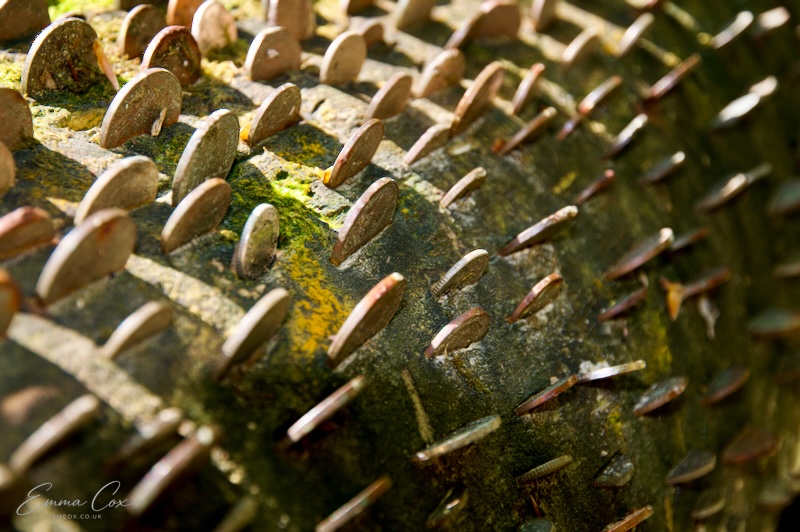
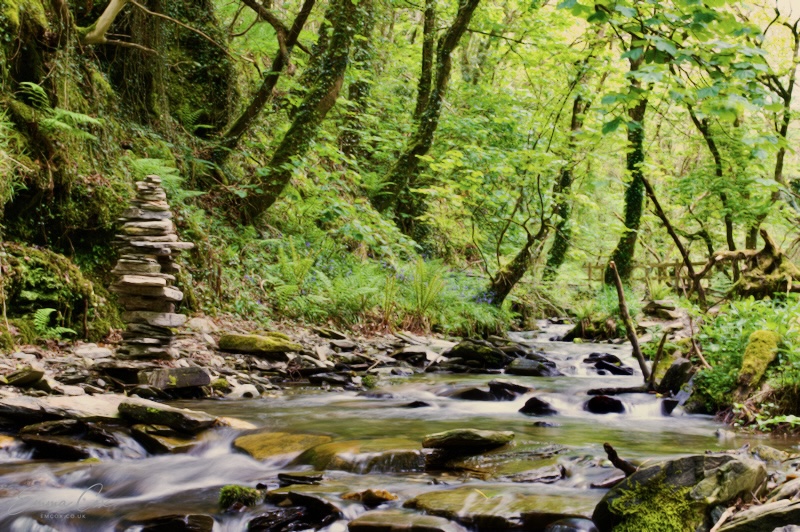
Which is why I am seeking respite in the leafy shade of the trees. It makes me think of dappled shade, whispering trees and the merry song of the stream meandering through a woodland valley. Passed a fallen tree trunk that gleams a burnished copper from the hundreds of coins which have been hammered into the rotting bark. In the shallows of the stream, rock stacks rise up from the rushing waters. The pathway narrows. The rocks close in, dripping with moss and clumps of hart’s tongue. The whispering trees are accompanied by a new sound; the hissing, roaring white noise of a waterfall misting the air with a soft wind leaving my skin damp and cool.
It has me thinking of St Nectan’s Glen.
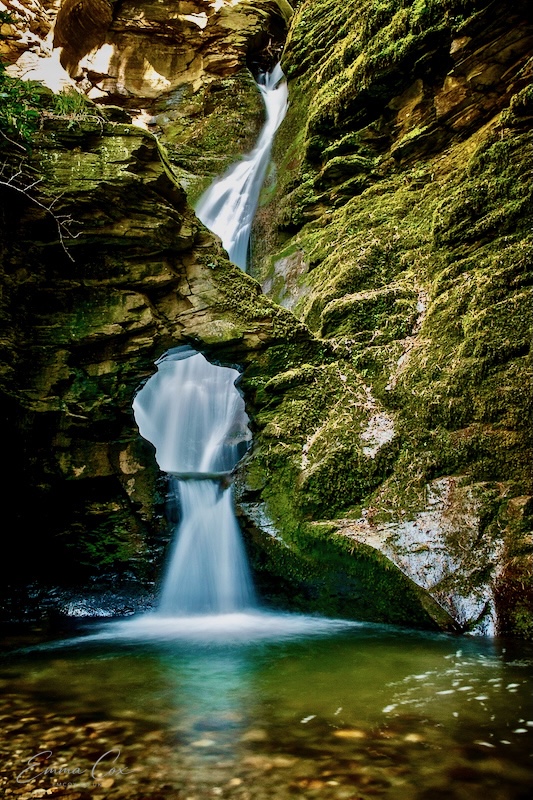
Unfortunately, thinking is all I can do at present since it lies in Trethevy in North Cornwall and I live down in the joint of Cornwall’s big toe. However, as I grew up and lived that way for many, many years, the place is seared into memory. In fact, it’s even cropped up in my fictional writing.
If someone says ‘write what you know,’ what you think you know might be a pack of lies made for entertainment by a man sitting in his cabin overlooking the sea in a cloud of opium two centuries ago.
Write what you know
One writing ‘rule’ which often crops up is ‘write what you know’. Now, I don’t know much about living in the fantasy lands I world build, but I can tap into my lived experiences, emotions, and sensory details, all of which are relatable to the reader as we are all human. (Unless you’re an AI bot scraping my work. In that case, please F off.)
I fell in love with St Nectan’s Glen because of the geology and nature. The waterfall itself is a marvel as it cascades down the rock face and into a deep basin, then it pours through a natural stone aperture as another smaller waterfall. Continue downstream, and you find ruins of old mills and two intriguing maze rock carvings which could be ancient but equally could be a bit of Victorian graffiti pretending to be older.
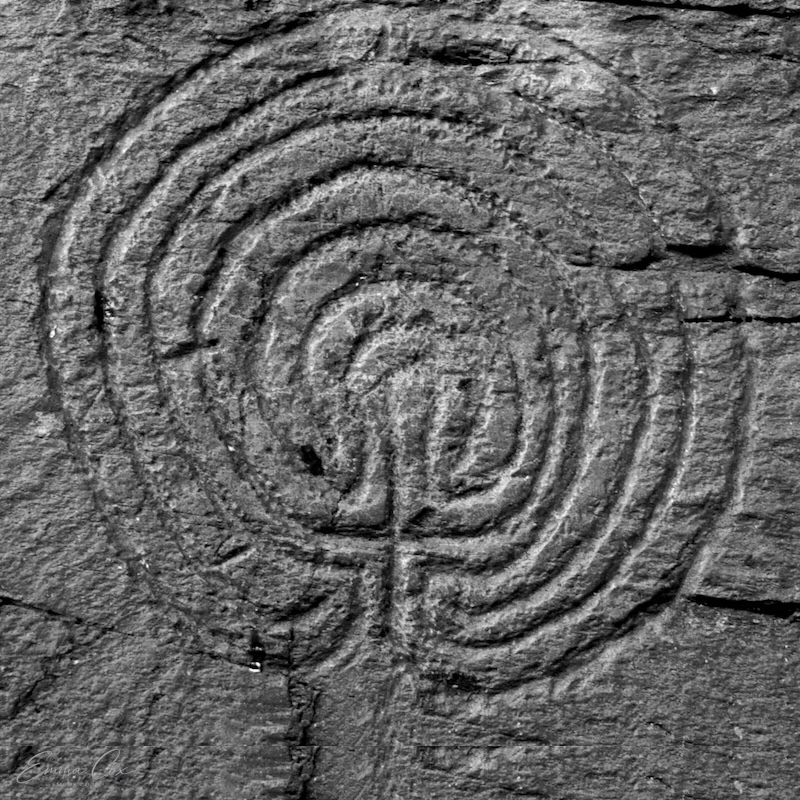
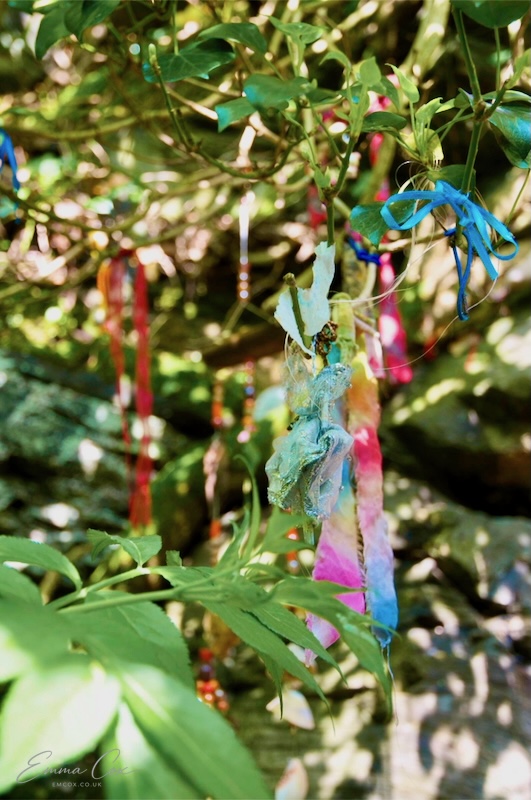
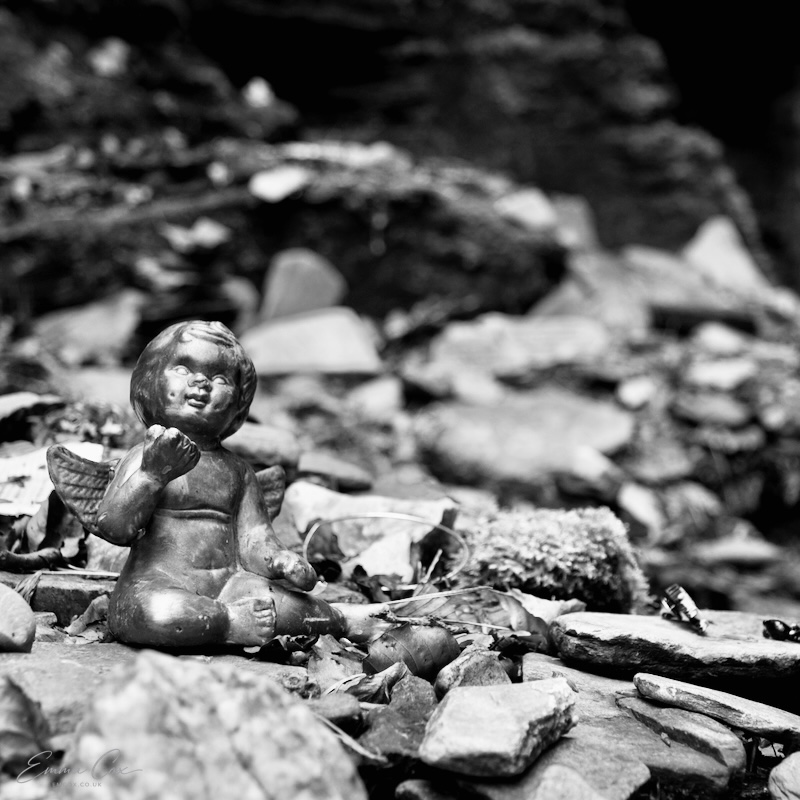
Considering the history of this place, the latter seems to be more likely. St Nectan’s Glen feels magical because you will find the fingerprints of humanity’s creative and spiritual activities. Clouties hang in prominent hawthorns. Small offerings perch on natural shelves in the rock face. Coins are hammered into bark. Stones are stacked upon each other. You question the purpose of these offerings. The hopes and wishes given form and left in nature for the power of the place to do its work. It was a place for fairies to frolic, and where druids gathered to do whatever druids did back in their heyday. Even King Arthur and his knights came here. Although the present site is very much a place for neopagans, the roots here equally plunge deep into Christianity.
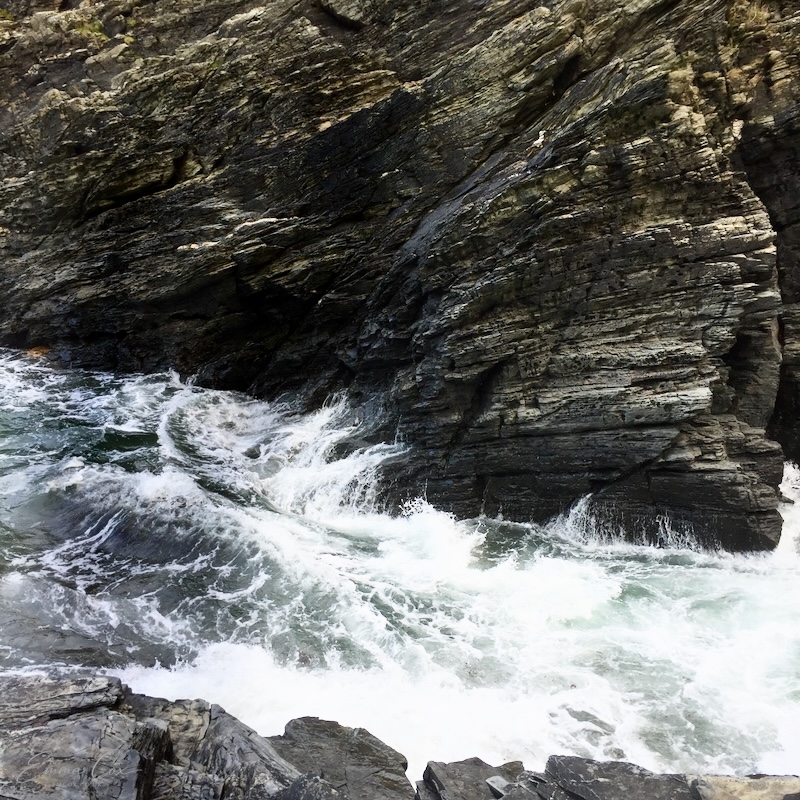
St Nectan was one of the many Irish missionaries who came to Cornwall to spread the Christian word. He set up shop across the border in Hartland, Devon. Later, he came to Trethevy, built a hermitage above the waterfall, and rang a silver bell to warn ships of the perilous rocks in the mouth of the aptly named Rocky Valley. The silver bell is said to lie at the bottom of the waterfall, and a ghostly monk still walks the path along the stream.
The combination of nature, geology, water, and the magical history behind the site inspired me to place a version of the glen with its waterfall into one of my fantasy novels. I wanted a place that was naturally beautiful with a deep history of stories passed through generations. A place of comfort and solace, but also a place of hidden dangers once the sun had set.
The site helped me tell a story. But the truth is, St Nectan’s Glen is a literary fable in itself.
St. Who?
Scratch the surface and the first thing we discover is St Nectan isn’t the only name it went by. During the 19th century, it was called Nectan, Necton, Nechtan, Nedan, Neot, Neighton, Nyghton, Knighton, Kneighton, Nightan, Niton, Nedan, Nathan, and Kynance, with Saint almost always used as a prefix.
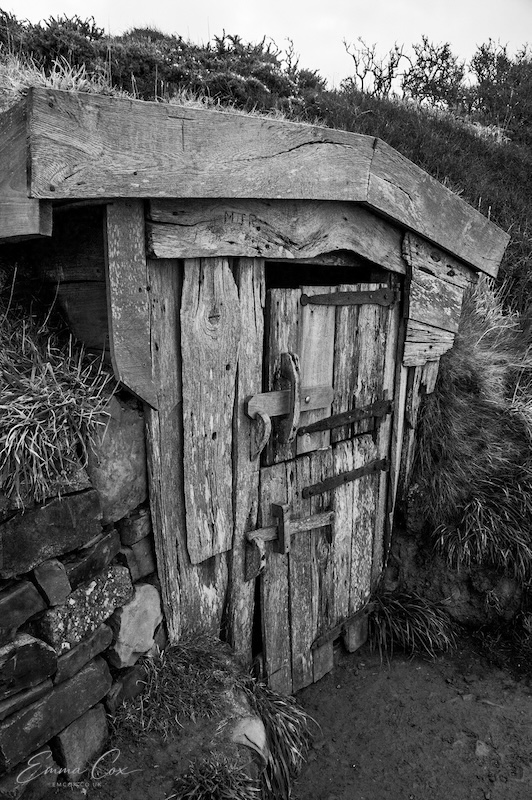
Originally, it was part of the Trevillet Estate and known simply as Trevillet Glen. The likely culprit who attributed St Nectan to the site is the well-loved Cornish poet Robert Hawker (1803–1875). I will write more about this eccentric parson in a later article, but for now you only need to know he wrote poetry (with the help of some opium) in a cliffside hut which he built from shipwrecked timber at Morwenstow. He penned The Song of the Western Men AKA Trelawny, which has ended up being the Cornish national anthem.
In 1832, Hawker published Sisters of the Glen in Records of the Western Shore. In this version the name attributed to the site is Nathan.
It is from Nathan’s mossy steep,
The foamy waters flash and leap.
It is where shrinking wildflowers grow,
They lave and Nymph that dwells below.
But wherefore in this far off dell,
The relics of a human cell?
Where the sad stream and lonely wind,
Bring man no tiding of his kind!
Long years ago! the Old Man said,
’Twas told him by his Grandsire dead.
One day two ancient Sisters came,
None there could tell their race or name.
Their speech was not in Cornish phrase,
The garb had marks of loftier days.
Slight food they took from hands of men,
They’d wither’d slowly in that glen.
One died! the other’s sunken eye,
Gush’d till the fount of tears was dry.
A wild and withering thought had she,
“I shall have none to weep for me!”
They found here, silent, at the last,
Bent in the shape wherein she pass’d.
Where her lone seat long used to stand,
Her head upon her shrivell’d hand!
Did Fancy give this legend birth?
The Grandame’s tale for Winter hearth.
Or some dead Bard, by Nathan’s stream,
People those banks with such a dream?
We know not! But it suits the scene,
To think such wild things here have been.
What spot more meet, could Grief of Sin,
Choose at last to wither!
Nectan is nowhere to be seen. In his notes accompanying the poem, Hawker states the valley is nameless, but the waterfall goes by Nathan’s Kieve (and also commonly called Nathan’s Cave). The facts of the poem were told to him by an old man at that very spot.
Hawker published the poem again in 1846, but the title changed to The Sisters of Glen Nectan and changed the opening.
“It is from Neot’s mossy steep
The foamy waters flash and leap.”
Neot was a monk who lived most of his life in Glastonbury before retiring to Cornwall (as most people still do) for the peace and quiet, yet suffered frequent visitations from King Alfred (apparently he didn’t much like Alfred’s ambitious nature).
But this is where Nectan makes an appearance. The poem greatly roused the popularity of the glen and waterfall, and Hawker’s “legend” gained legs and ran away from him.
“Every year of my life for full ten years I have had to write to some publisher, editors, or author, to claim the paternity of a legend of a ballad or a page of prose, which others have been attempting to foist on the public as their own.”
Hawker, writing to Carnsew 02/01/1858
I feel Hawker would have been very vocal about people and AI stealing his work if he were alive today!
The legend of the two sisters, the bard, and the various saints continued to be retold by others and by Hawker. Later, he continued with his embellishments and states untruthfully that the cauldron beneath the waterfall had borne the name St Nectan’s Kieve for ten centuries, and that King Arthur and his knights went to consult St Nectan before going off on their quest to find the holy grail. Nathan’s Cave was becoming lost as Hawker’s legend grew larger. The ruined building above the waterfall was no longer the abode of two foreign sisters, but the relics of a hermitage cell of St Nectan, the brother of St Morwenna (Hawker lived in Morwenstow, named after the saint, which neighbours Hartland, where St Nectan lived).
Baring Gould, Hawker’s biographer, declared the poet transferred the story of the two sisters from North Devon, where they did exist, to St Nectan’s Glen. Eventually, Hawker admitted he invented it himself. The story of the two sisters is very similar to the true tale of the Ladies of Llangollen. Two Irish upper-class women fled to Wales to avoid being forced into unwanted marriages and lived together as a couple for the remainder of their lives. Speculation rose whether the two women were in a sexual relationship, and they gained celebrity status, despite their modest lives. However, they hosted many famous guests, including the Duke of Wellington and Percy Shelly.
Which leads us back to the site’s original name, Nathan’s Cave. Who was Nathan? Well, Nathan Cock and Nathan Williams were buried in Tintagel churchyard in the 18th century. One of them might be our Nathan. The ruins above the waterfall might hold some clue. A monk’s hermitage or cottage inhabited by two foreign sisters is good for storytelling. Yet it’s more likely the building was a mill. Perhaps Nathan was the owner or someone who had a habit of clambering into the cauldron below the waterfall to wash.
The legend echos on
What I find interesting is Hawker’s legend never really died. It sparked other writers in his time to pass his work off as their own and inspired them to visit the site and add their own touches, including sprinklings of fairy or supernatural folklore. They still continue to do so. In 2025, a unicorn’s skull was “discovered” by a visiting family. As unlikely as this can be, the find added another layer to the fictional stories created from this place. Obviously, it can only be Merlin’s unicorn, which he rode at the Battle of Badon. Cornwall’s economy thrives on tourism, so anything to flog it to keep visitor numbers high is a win!
So a place which I reimagined in my own fiction is no more than an idyllic spot filled with its own fictional backstory. Although there is little truth in fiction. There is a lot to be enjoyed and to be inspired by. And if someone says ‘write what you know,’ what you think you know might be a pack of lies made for entertainment by a man sitting in his cabin overlooking the sea in a cloud of opium two centuries ago.
Notes:
The Poetical Legends of Trevillet Glen and Waterfall – Cornish Guardian 2nd January 1914
If you wish to support what I do, please donate through my Kofi page.