Cornwall’s Edge
For most of my life, I have lived within walking distance of the coast. If the wind was in the right direction and my window was open, I could hear the sea’s ceaseless roar. It is the perfect white noise to fall to sleep to – unless, of course, it was a storm, and the sound of the sea would be accompanied by the sting of rain on the windows and gale force winds buffering the house, seeking a way in.
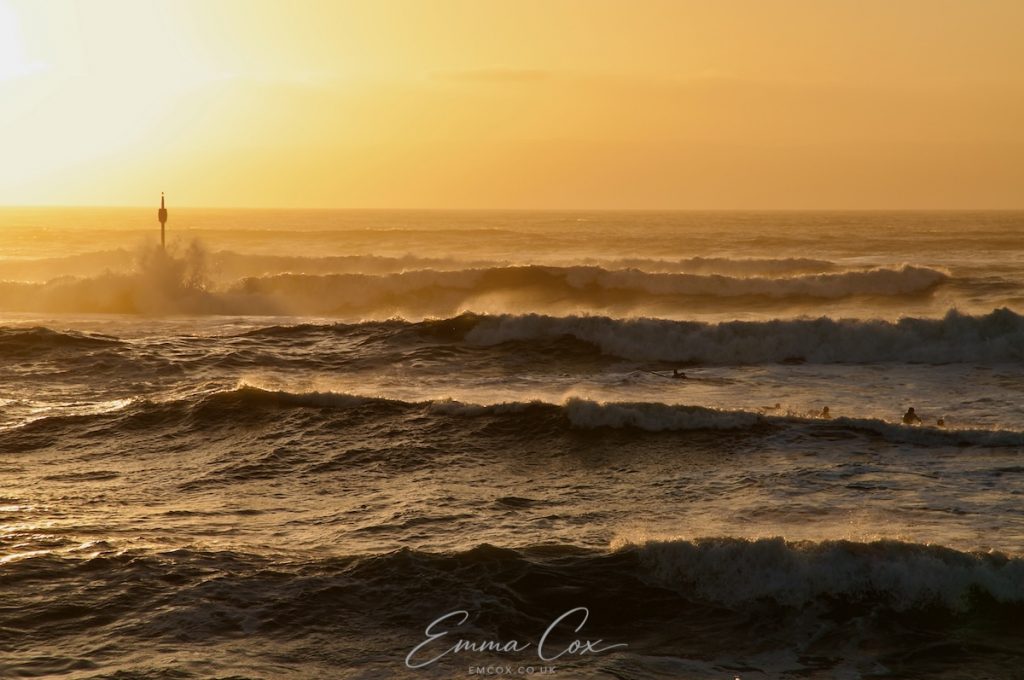
The sea is an unfixed view. The water forever shifting in movement and colour. I can take a photograph on different days in similar conditions, but I know it’s never the same because the waves and currents churn the water, imperceptibly shifting the sand and eroding away the cliffs.
Of Tin and Trade
The sea surrounds Cornwall on three sides and is paramount in shaping the county. The sea was not a barrier, but a path for commerce and a spreading of ideas and values. Consider the similarities between the ancient sites of their neighbouring Celtic cousins. Also, Cornwall was prized for its tin. Bronze Age shipwrecks off the coast of Israel were found to contain tin ingots originating from Cornwall. Tintagel might be famed for its links to mythological Arthur, but in the 5th and 6th centuries, its wealthy inhabitants enjoyed food and wares from the Mediterranean and Africa.
The sight of the fishing boats reminds me the sea also provides food. Fishing was once one of the biggest industries in the region. Tom Bawcock is a folk figure from Mousehole who saved the village from famine by fishing during a great storm. Such fishing ports are past their heyday since food imports became cheaper. But people are still in the industry. I’m lucky to have a retired neighbour with a fishing boat, and he swaps me today’s catch for a bottle of wine.
Smuggling and False Lights
With rampant poverty in the county, its abundant coastline and close proximity to the continent meant Cornwall became a hotbed for smuggling. This was no quiet side hustle either. Sometimes, entire communities were involved, so the activities were hidden in plain sight. The most well-known is John Carter, who went by the moniker the King of Prussia.
And I cannot mention smugglers without mentioning the nefarious wreckers. Smugglers gained an almost Robin Hood status in their efforts to ensure the poor could enjoy goods like tea without paying the high taxes. Wreckers were seen to be immoral, deceiving vessels onto the rocks with false lights, drowning the crew, and stealing their cargo.
The sea is an awesome neighbour, and the locals have learnt to respect it. Still, accidents occur. Shipwrecks litter the waters and sometime reappear beneath the shifting sands. The pilot gigs were the first unofficial lifeboats before the Royal National Lifeboat Institution came into being. But not all rescues are successful. Eighteen people lost their lives in the Penlee lifeboat disaster of 1981 when the RNLI lifeboat Solomon Browne went to the aid of the MV Union Star. There were no survivors.
Folk Tales from the Sea
Those who live and work beside and on the sea have their beliefs and talismans. In Newlyn, they left a part of their catch for the bucca, a supernatural being who was ambivalent to the people it shared its shores with. They wanted to keep on the bucca’s good side, and hoped the creature might drive tomorrow’s catch into their nets as a favour.
Mermaids are not uncommon on the Cornish shores. The one in Zennor is said to have fallen in love with a local man and taken him back to her home beneath the sea. Padstow’s mermaid was shot when she dismissed a man’s advances, and she laid down a curse with her dying breath.
I enjoy delving into the folklore associated with the sea. Especially the ones specific to Cornwall. Here, I can take the bones of old stories and rework them to make my own.
A Literary Anchor
I am not the first writer to find inspiration in the Cornish sea view. Virgina Woolfs To The Lighthouse was inspired by her view of Godrevy Lighthouse in St Ives Bay. Beeny Cliff is the origin of the cliffhanger. This frustrating popular story element was first penned by Thomas Hardy in A Pair of Blue Eyes. It is also the title of his poem, where he uses the location as an anchor to the grief and heartache he feels after the loss of his first wife, Emma.
Nearby, in Millook Haven, the cliffs are patterned with recumbent chevron folds. Yet move west, and the granite returns before slipping back beneath the sea. Sand dunes shift and bubble. There are no visible remains of the chapel at Porthminster Beach, and St Piran’s Oratory on Penhale Sands has been dug out. It is suspected to be the oldest church in Cornwall and possibly one of the oldest in England.
The railways brought another creature to Cornwall: the tourist (called ‘emmets’ by the locals). Those in the overcrowded, smoggy cities came for the fresh sea air. I have Cornish ancestry, but the generations who moved away did not forget its charm and continued to holiday here. My great-grandmother wrote poetry about her stays with family and friends.
Immersing myself in the salt water
There is also the surf. I owned a surfboard, but I never quite got the hang of it. What I love about my friends who are surfers is their love for the sea. I met up with one I hadn’t seen in ages, and the first thing they asked was if I’d been in the water. That was the most important thing to know.
I love the water. All year round, I will swim in the sea. Who needs a wetsuit? I like feeling the cold hit my skin on a sunny January day. The vocal swearing and swimming until my limbs warm with the rush of endorphins. I love being on the water, in the gig, gliding across the water with a smooth stroke and six oars hitting the pins in perfect unison.
Chasing the Light
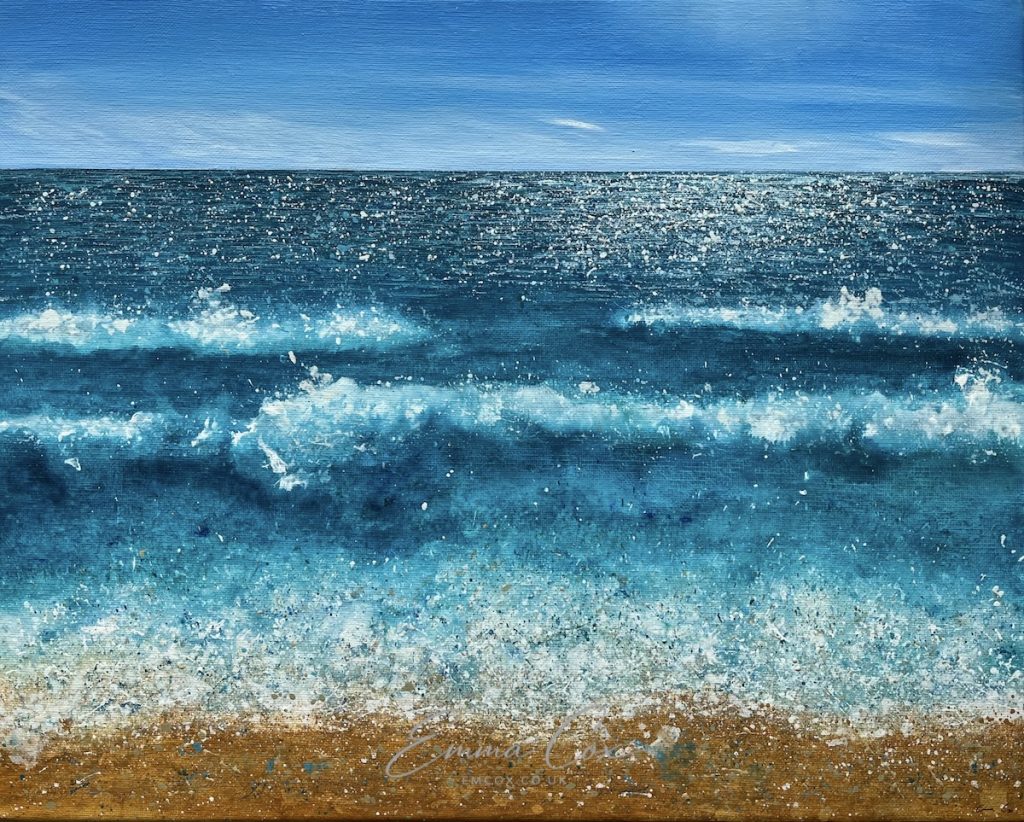
When painting the sea, I get lost in the process. My mind quietens, and I’m at the mercy of the ebb and flow. Artists are drawn to the sea. Drawn to the light. There is something special about St Ives Bay. The combination of the sea, sand and sky makes the light seem different. Even on the dull days. But perhaps this is how I prefer to see the sea, on those darker days where the cerulean waters turn to a silvery blue like a sword blade. Or at the golden hour when the calm waters swirl with kaleidoscopic colours akin to molten metal.
All my life, I have lived on the coast. I admit, I feel a little uneasy when I lose sight of the sea.
Yet here, the path leads us inland. You can choose to remain on the sands, enjoying the sea view, or you can follow the estuary inland.
Links: