There are many calendar markers throughout the year. Festivals, birthdays, and such. The rhythms of the earth: light and dark, bloom and decay, ebb and flow, the rising and shrinking of sap, and the celestial movements of the sun, moon and stars. When you shun the artificial living of 24hr light, temperature controlled environments, and out of season food, you regain that connection to those natural rhythms. Although farming has modernised, at its bones lies this connection. This year, midsummer serendipitously fell on Father’s Day. So I ventured up county to North Cornwall to see my folks, give Dad a homemade treacle tart, and join in with one event in the family calendar: the annual sheep shearing.
If there was one class of manifestation on this matter that he thoroughly understood, it was the instincts of sheep.
– Far from the Madding Crowd, Thomas Hardy
Someone told me they couldn’t decide if sheep shearing sounded idyllic or incredibly stressful. My answer: it can be both, depending on how it’s done.
For years, it has been a dreaded mark in the calendar due to the stress because shearing is a craft where quantity has the edge over quality. The shearer quotes per fleece and aims to get as many sheared in a day as possible. A hundred years ago, a shearer would on average do thirty-five sheep a day. A task which once took 20-30 minutes now takes 2-3, with professional shearers tallying 200-400 sheep in one day. Working with speed in mind, the potentially idyllic task turns stressful – not only to the owner, but to the sheep themselves.
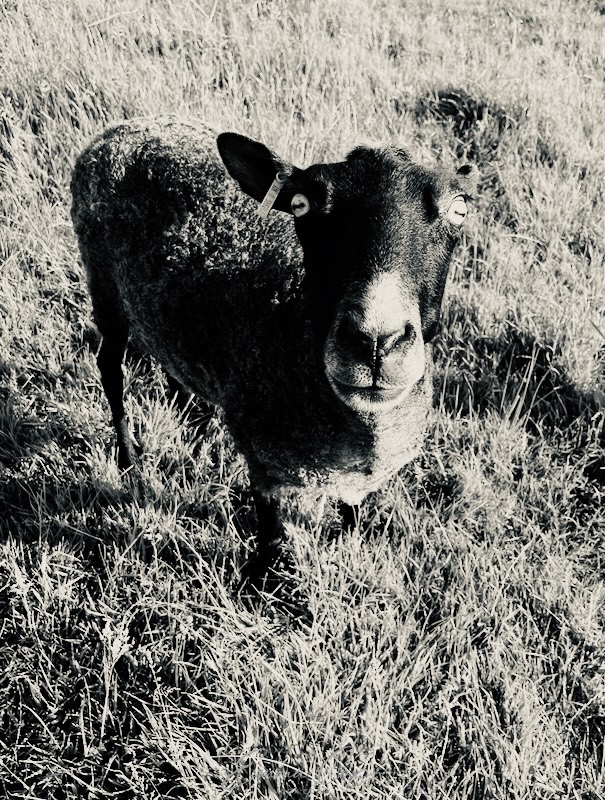
Breed, age, and temperament play a factor in whether a sheep is going to comfortably allow itself to be sheared or if it’s going to thrash around and seemingly grow an extra six legs. Then there’s the environment. Are they going into a shed/yard they’re used to? And the vibes (when did this become a popular word?) of the humans. This year, we also had to factor in the weather because we were experiencing the hottest June on record. With temperatures hitting 35C, it wasn’t solely the animals who were struggling with the heat.
One option for the farmer/smallholder is to learn to shear themselves. Unfortunately for my dad, his sole training experience with the British Wool Board was a horror show. It didn’t bode well when the first thing to greet him at the training centre was two sheep carcasses. It became clear why when the people doing the training were more interested in chatting to the local farmers who were on the course and not in guiding the total novices. They didn’t care if someone accidentally cut through the sheep’s skin, leaving them bleeding. “Keep going. We’ll sew it up later,” they said. Dad complained to the British Wool Board, but as no one else on the course did, no further action was taken. The welfare of the animal is paramount to my dad, so he wants a shearer who is equally compassionate.
“It is always desirable for the shepherd or shepherds to shear their sheep as they naturally take more interest in them than the gangs of strangers whose only interest is to get over as many sheep in a day as they can.”
– Article in the Cornish Times, May 1909
The problem is, finding a shearer is no small task. Even getting a call back from last year’s shearers is a boon. One we didn’t receive. The best option is word of mouth. Know someone who owns sheep? Ask them. Cadge a mobile number. Name drop. Beg if need be. Luck had it, we found ourselves a local sheep shearer.
Unless you shift flag over to Australia for half the year (very much like the beach lifeguards), sheep shearing is seasonal work. Our shearer already has a farm (with sheep) and another job, but he finds shearing relaxing and does it as an evening and weekend sideline in the small summer window when everyone is in demand for his services. He had a suitable world-weary, sardonic sense of humour, a stocky build, and arms like Popeye. I can imagine him being a longbow man in a previous time – he certainly has the muscular power to draw one.
In previous years, we had at least two shearers and all the sheep were done in a single day. This time, we would shear over three evenings (as I said, the shearer has a day job). This worked out well since a) it was f-ing hot and b) we could bring the sheep calmly into their familiar shed without much stress.
I must note, Dad raises rare breeds. The aim being in lambing and selling in order to keep the genetics going rather than raising for meat. A trip to the abattoir is low on the list; he’d much rather the sheep enjoy retirement in a field.
On those blisteringly hot days (yes, I know other places in the world are hotter, but this isn’t normal for the UK, and the humidity was high, and our homes are geared up to keep the heat in, not for cooling) we were in the fields at 6am, moving sheep in preparation. The sheepdog is much happier to be outside amongst the singing skylarks and performing her role in the slightly cooler dawn air. Then it was a case of seeing to other chores – not quite making hay while the sun shines (a job for another fortnight) but putting up guttering – before it got far too hot and we retired inside for a siesta (in my case, editing the novel I’m writing).
Once the shearer arrived, we drove the sheep into the shed with little coaxing. The humid air feels solid. The barn swallows don’t seem perturbed by the heat and do their aerial acrobatics to their nesting chicks in the shed. The penned sheep pant. I’m sure they will appreciate losing the heat and weight of their fleece.
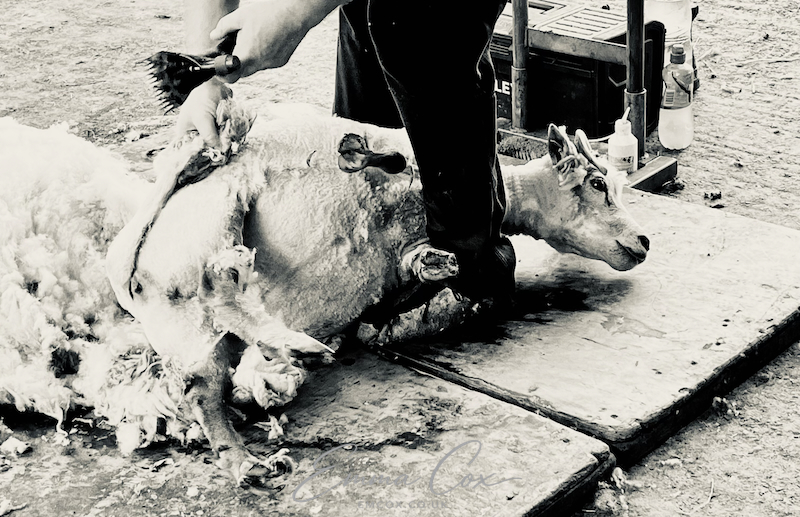
With our sole shearer, the job isn’t rushed. We chat while giving time for the sheep to calm down. Then comes the methodical “dance”. The shearer begins by putting the sheep on its rump and holding it by the front legs. Then he carefully removes the fleece while moving the sheep into various positions until the whole fleece comes off in one piece, and the sheep is allowed to go freely back to the field. I’m reminded of Bathsheba in Thomas Hardy’s Far from the Madding Crowd, noting how one newly shorn ewe looked like Aphrodite rising from the foamy sea. Back then, they didn’t have rows of fresh whole chickens on display in supermarkets, which is what a lot of shorn white-fleeced sheep tend to look like.
The clean, sleek creature arose from its fleece – how perfectly like Aphrodite rising from the foam should have been seen to be realised – looking startled and shy at the loss of its garment, which lay on the floor in one soft cloud, united throughout, the portion visible being the inner surface only, which, never before exposed, was white as snow, and without flaw or blemish of the minutest kind.
– Far from the Madding Crowd, Thomas Hardy
There is a fair bit of bleating. I wonder if there is some momentary confusion after the drastic haircuts, which make them slightly unsure who everyone is.
With each sheep passed to the shearer, the pen is made smaller. The lack of space makes it easier to handle them. The shearer is attentive to the task, working with precision and care, taking a relaxed 4-5 minutes per sheep rather than breaking speed records. My role in the process is to sort the fleece. Once shorn, I place it on a table and tease out the worst of the muck still caught in the fleece, then I fold it up and bag it. Gloves are a necessity, unless you want them to be deeply conditioned by the lanolin in the wool.
We have a mix of sheep. White fleece is worth more because it can be dyed. But I have a lovely undyed blue/grey throw made of Gotland fleece.
With the shearing complete for one evening, we pack up, shower, and raid the fridge for a 10pm snack and a refreshing non-alcoholic beer. The following day, we repeat the process. Dad, who normally gets stressed when it’s shearing time, was laughing and cracking jokes. Out comes the annual joke where we debate how much profit we would have made on this wool back in medieval times when the world traded with England for its superior wool, long before we made synthetic clothes out of the black juices of dead dinosaurs. Gone are those profitable days. We will be lucky to break even once the fleeces are sold.
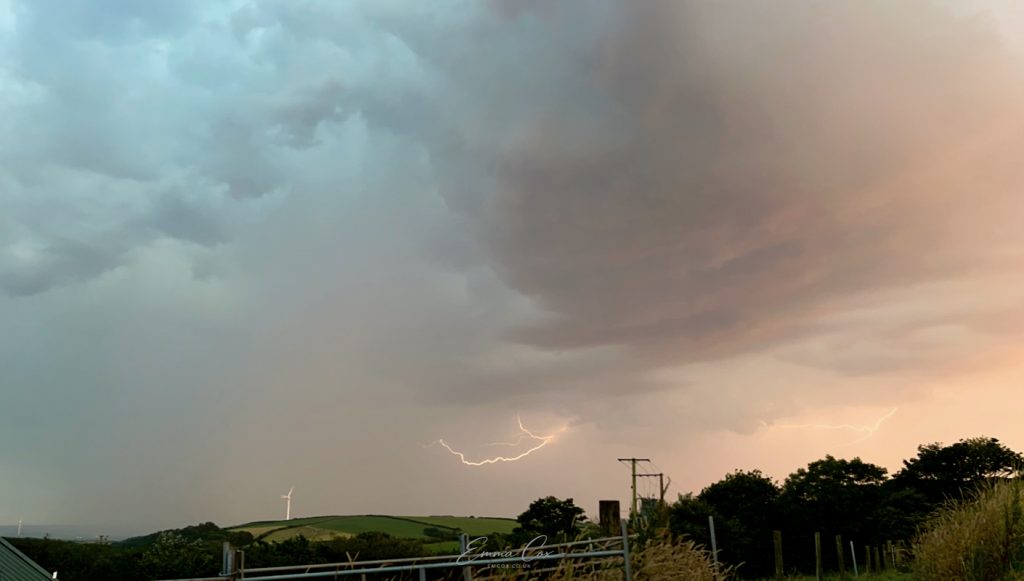
On the third evening, we finished on a thunderstorm. It gave up trying to rain, but the cracks of lightning and the peals of thunder rolling overhead were better than anything you could find to watch on the telly. (The sheepdog disagrees. Thunderstorms and fireworks are the only times she will cuddle up to you for comfort.)
Every voice in nature was unanimous in bespeaking change. But two distinct translations attached to these dumb expressions. Apparently there was to be a thunder-storm, and afterwards a cold continuous rain. The creeping things seemed to know all about the later rain, but little of the interpolated thunder-storm; whilst the sheep knew all about the thunder-storm and nothing of the later rain.
– Far from the Madding Crowd, Thomas Hardy
That is a chore completed for the year. Midsummer has passed. The days are becoming inexorably shorter. But come next summer, I will be back here again for our annual sheep shearing.