The Cornish are drawn to the subterranean. Their lives and livelihoods mining and excavating the rich seams stitched into Cornwall’s bedrock reaches back thousands of years. Their expertise became a global commodity, birthing the saying that if there is a hole to be found, you will find a Cornishman at the bottom of it. That spread of knowledge carried with it cultural pastimes, as I recently discovered the Cornish miners who migrated to Mexico for work brought football with them.
My vein of Cornish ancestry compels me to explore any yawning hole in the rock, eager to edge inside and discover what the darkness is concealing. It is not just the mines that interest the Cornish. There is an ancient, subterranean curiosity rarely found outside west Cornwall called a fogou.
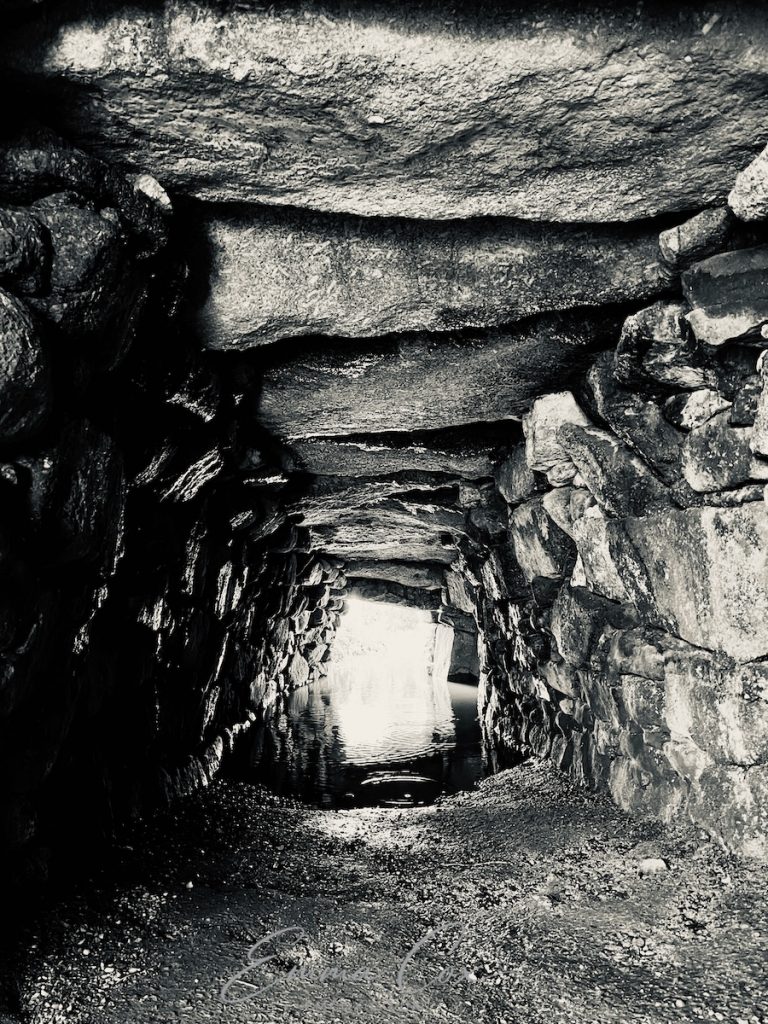
The fogou (translation: cave/hiding place) is an artificial underground cave and dates from 5th century BC to the 2nd century AD. Their walls are drystone and their ceilings capped with a series of lintels. Fogous have multiple entrances, which are often so low that a person must creep through to gain entry.
When we think of dark, human-made places, we conjure up thoughts of tombs, but fogous are found near or within settlements. These were spaces for the living, but historians and archaeologists cannot pinpoint how they were used.
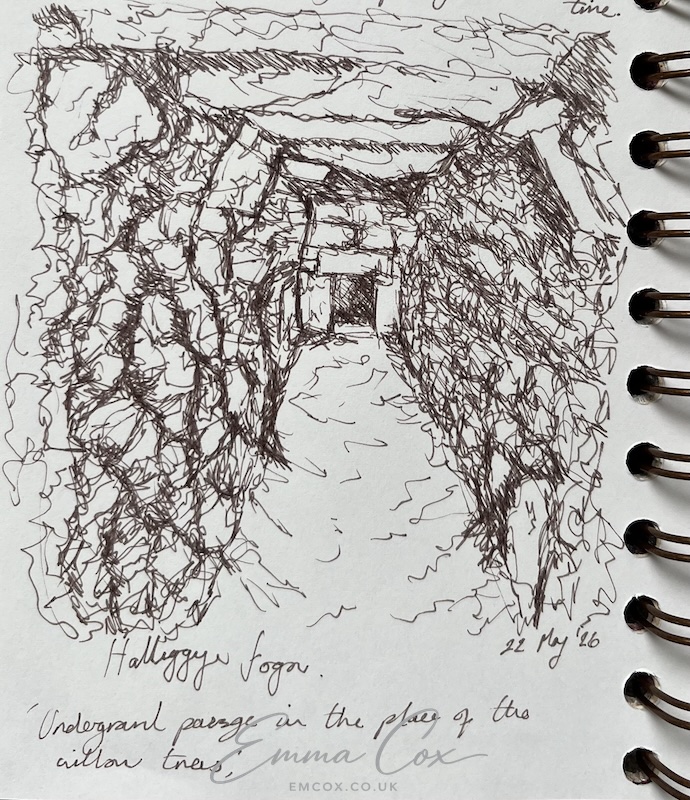
Halliggye fogou
Translation: the underground passage in the place of the willow trees
Amongst the lush May greenery, there is a slit in the earth like a sword cut. Steps, slick with damp lead to something older, deeper, darker.
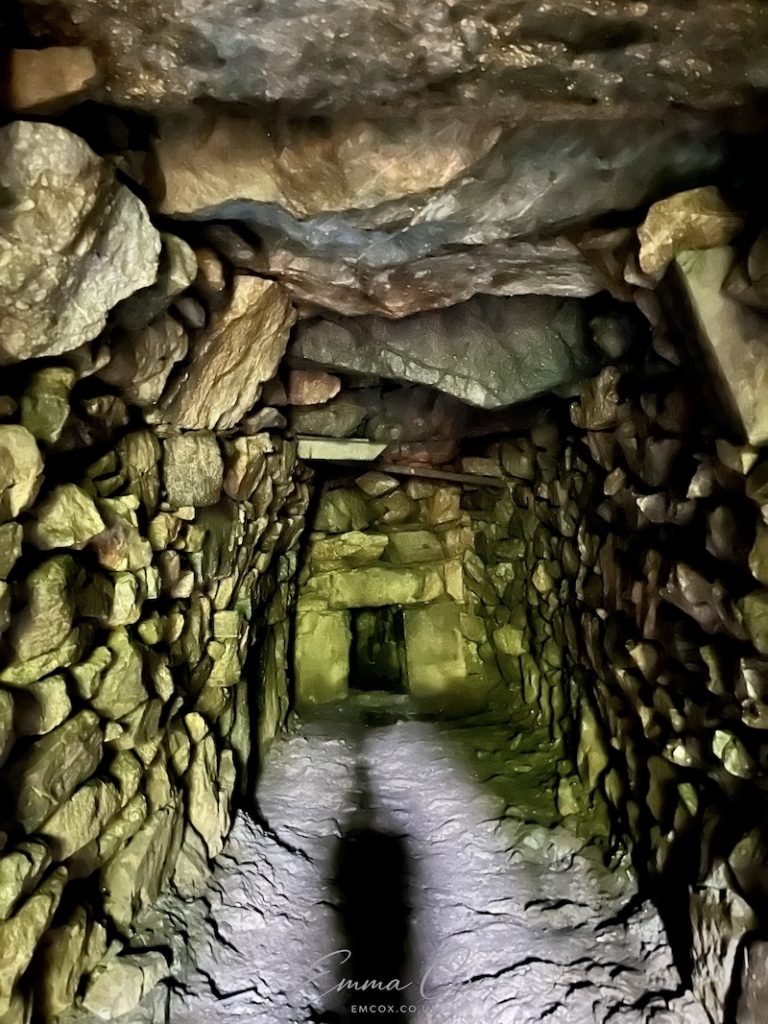
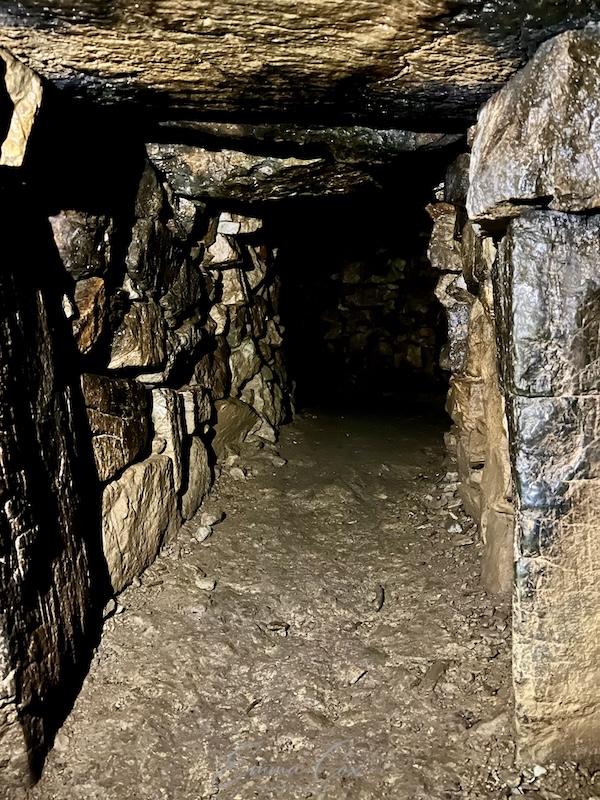
This is not the original entrance but one excavated and elaborated when a plough cut through it. As a visitor, I should perhaps be thankful, for inside there are examples of the “creep” entranceways. Lintel-topped openings, which give the impression of a small hearth, that most would struggle to squat and wedge their way through. Most would have to go on hands and knees. Once through, the passageway opens vastly so one can stand and move freely, but it is pitch black. All I have available is the torch on my camera phone, and it does little to illuminate the long passage with curves to my left. It ends on a sealed “creep” entranceway. The ground thus far has been flat and even, but here I find a large angular stone set by the entrance. A proper ankle breaker if you didn’t have a light to hand. Which makes me wonder if it was a stone they couldn’t be bothered to excavate, or deliberately placed there.
A Hiding Place
One suggested purpose is they were hiding places. The close proximity to a settlement, the bloody awkward entranceways and trip hazards hint at this. We can imagine this as the Bronze Age equivalent of a priest hole. In fact, Boleigh fogou is noted to have harboured Royalists during the Civil War. If invaders attacked, people could hide safely inside, and if the invaders did find the entrance, it was so narrow, those hiding could theoretically fend them off. This is the worst-case scenario. Perhaps it was also used as shelter during stormy weather. Did their beliefs force them underground because they feared the thunder? Or did they think practically, retreating underground when the rain and high winds threatened to damage their homes?
These spaces may have equally been hiding places for goods as well as people. Things of worth they did not wish to be stolen. It has also been suggested these spaces were grain stores. Perhaps the awkward entrances hindered the outside environment from getting in, and kept the stores dry and at an even temperature.
One issue is there has been little archaeological evidence found to firmly pinpoint to any of these suggestions. Another suggestion, which is the backup answer for ‘I haven’t got a clue,’ is it’s all ritual.
A place of ritual
Are these spaces in fact places of worship? Boleigh fogou has an interesting addition. At the entrance, there is a carved figure holding what appears to be a spear in its right hand and what could be the head of a serpent in its left. Is this the image of a lost Celtic or Romano-British deity? Was it carved specifically for the fogou, or has it been reused from another sacred site? Was it placed there simply as a charm to ward against evil or a precursor to the ritualistic practices the one entering would encounter?
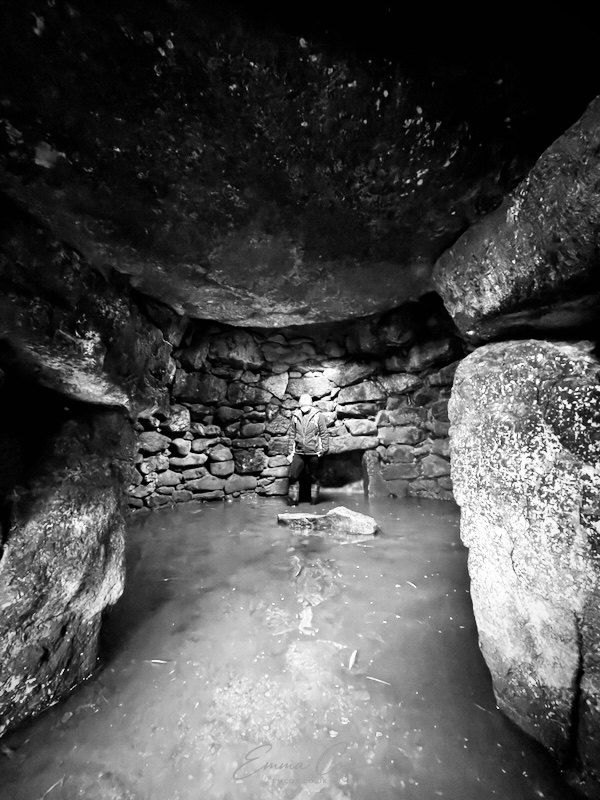
The fogou at Carn Euny has not only passages, but a round stone chamber. This gives the impression of a more communal space. Being circular, people can sit around and see not only each other but whoever is in the centre. It does play vividly with the imagination. A humbling creep into the main chamber where rituals, now lost to time, took place.
I wonder if these spaces were multifunctional. Perhaps a collection of the above and potentially more? However, I have to remind myself I am looking at these spaces with modern torches and not a small flame from an oil lamp. These spaces would have been dark, but I do not find them unsettling. These are rewarding places to visit and explore. Their purpose as in the dark as the fogou itself. However, this lack of detail conjures the human desire to make stories from the bones we have left. To find meaning, even if there is no truth in it.