Cornwall’s Treasured Emblem
The news heralded many things this week, but beneath the political headlines, you may have read that Cornwall’s beloved chough (Pyrrhocorax pyrrhocorax) has returned to Tintagel.
While our Welsh Celtic neighbours have Bran the Blessed and his association with the raven, the chough is Cornwall’s treasured emblem and is deeply associated with King Arthur.

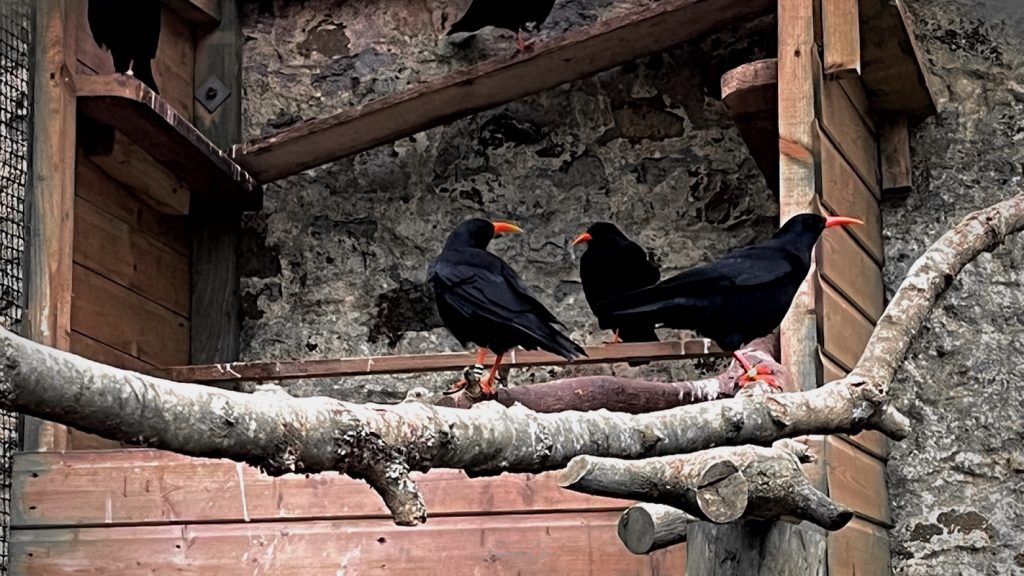
The striking difference between the chough and other corvids is its glossy, black plumage and vivid red beak and legs. Alongside the miner and the fisherman on Cornwall’s coat of arms, it is considered the county’s national bird. The chough also appeared on the coats of arms of Thomas Becket (of the troublesome priest kind) and Thomas Wolsey (of the Wolf Hall kind). Neither died particularly well!
The crows and choughs that wing the midway air.
King Lear, act 4, scene 6
Once widespread along the peninsular and the coast of Britain, the rapid decline of the chough can be attributed to the disappearance of suitable habitat, as well-grazed coastal pasture was lost to arable farming and scrub. Their rarity only made their demise more rapid. Trophy hunters and egg collectors cornered the choughs in their Cornish stronghold. They were last recorded nesting in the 1950s and later vanished from the county.
Revival in Cornwall
About 300 breeding pairs remained in Wales, Western Scotland and the Isle of Man. For many years, the only place to see a chough in England was in a zoo. In the 1990s, Paradise Park in Hayle kept a number of them and still has choughs today. I had the delight of recently partaking in an evening talk and sketch event at Paradise Park with the Friends of the Towans Art Club.
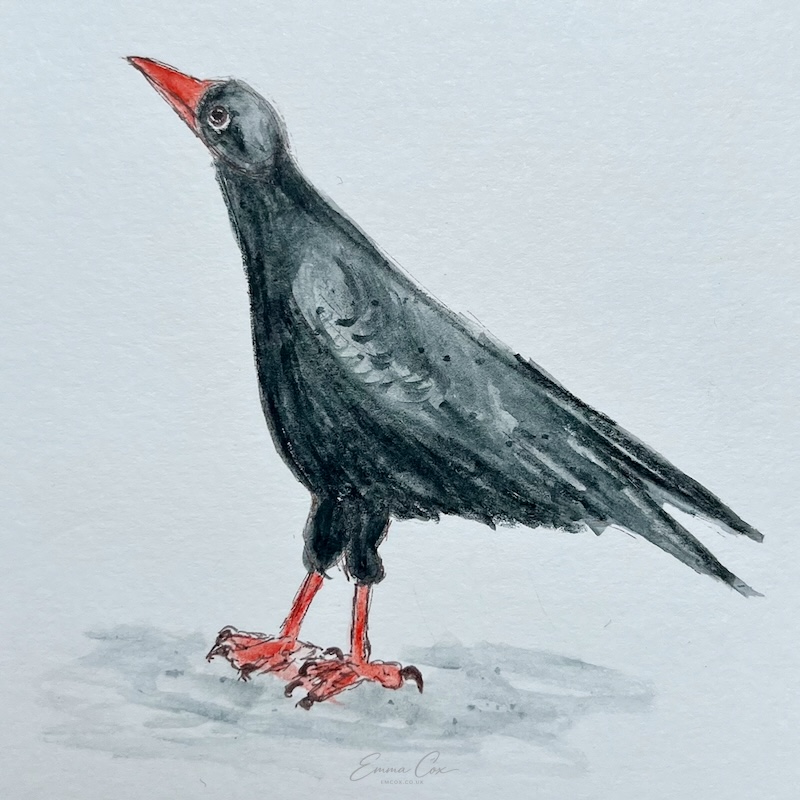
Conservation efforts were made to revive the coastal habitat, and in 2001, Cornwall had three wild choughs who’d migrated from Ireland back in residence. The following year, two paired, and the first wild chicks were born in the county in fifty years. By the summer of 2019, 100 wild choughs call Cornwall their home, and their numbers will hopefully only grow. These numbers are collected by volunteers and kept by Cornwall Birds.
The Birds – the King Arthur version
This folktale believes that the chough used to be black all over, like the raven. Merlin gifted King Arthur a chough as a wedding present. The canny chough overhears plans of an assassination plot. Arthur, asleep in his chamber, is blissfully unaware that the knight standing guard at his door plans to murder him. The chough wakes his king, and Arthur is astonished to find the bird’s beak and legs dripping with blood. Arthur rushes from the chamber to find his would-be assassin lying dead in a growing pool of blood; his eyes clawed out and his face and throat a ribbon of slashes, slain by the faithful chough. Arthur summoned his court and knighted his saviour, Sir Chough.
King Arthur’s Familiar
Another folktale gives an alternative reason for the red colouring. Arthur’s soul fled into a chough with red-stained beak and legs, bloodied from his final battle. Another variation says Arthur will return one day in the form of a chough. So you could say the return of the chough to Tintagel, the legendary birthplace of King Arthur, is a nod to the myth that he has returned, his spirit embodied in a chough. To kill a chough is deemed to be bad luck – do you really want to risk killing King Arthur?
If you enjoy birds and Cornish folklore, you can discover more about Cornwall’s Royal Raven and links to Bran the Blessed.